Internal Complaints Committee

International Multidisciplinary
Conference 2026 on 3 & 4 March 2026.

Conduct of the Continuous Assessment-I of Even Semester of the academic year 2025-2026

END OF SEMESTER EXAMINATIONS APRIL-2026 EXAM FEE NOTIFICATION

Our College has been ranked 59 among colleges in India in the National Institutional Ranking Framework (NIRF 2025) released by the Ministry of HRD , Government of India.

acmdu1881@americancollege.edu.in 0452-2530070
Campus Trees

Holoptelia integrifolia

ஆவிமரம்

Family:  Ulmaceae

Common Names: Indian elm, Jungle cork tree, Kanju

Flowering Period: February-March

Description                                                          

  • Indian Elm is a large deciduous tree, growing up to 18 m tall. It has grey bark, covered with blisters, peeling in corky scales on old trees.
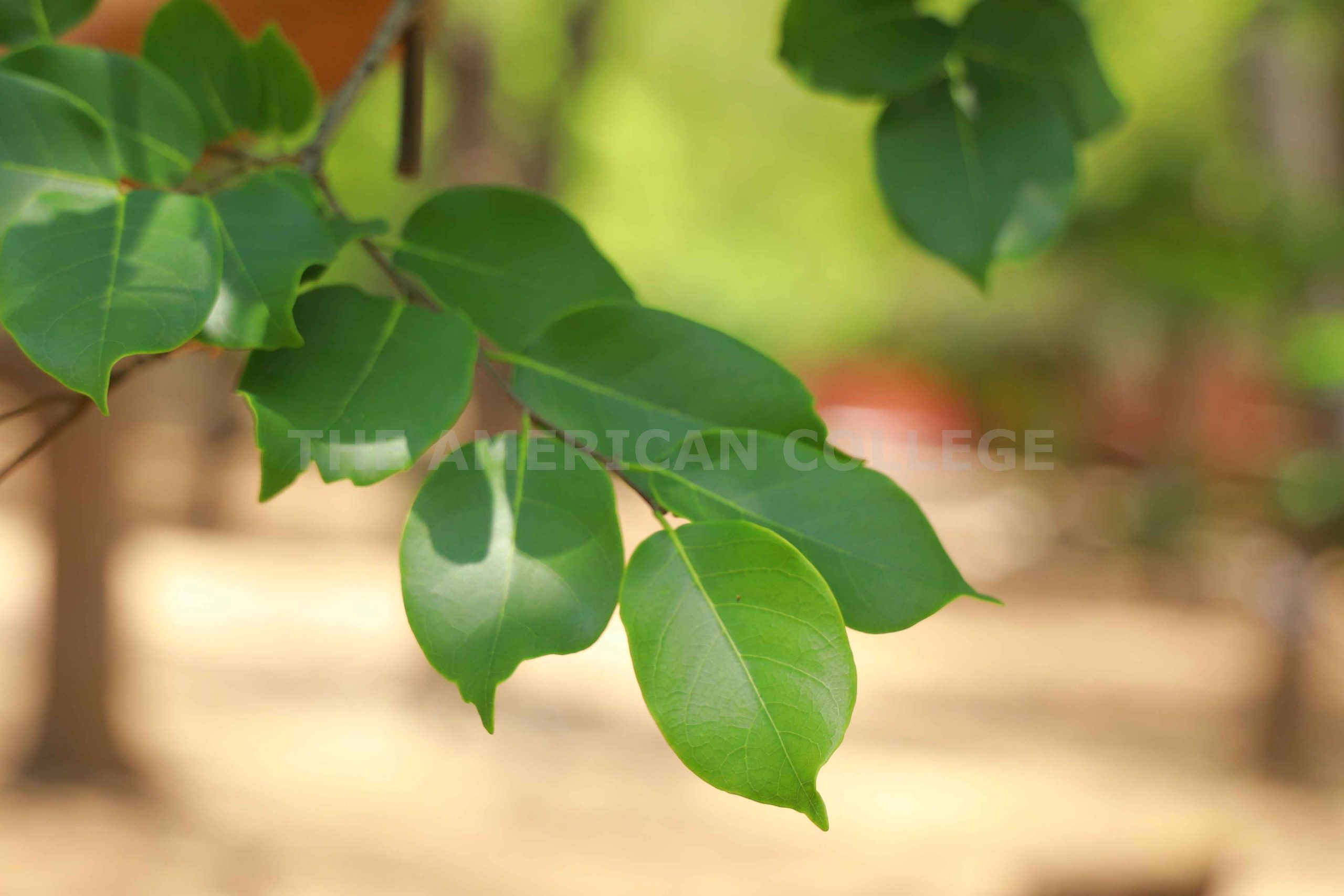
  • Alternately arranged leaves are elliptic-ovate, 8-13 cm long and 3.2-6.3 cm wide, smooth, with entire margins, and a pointed tip. Leaf base is rounded or heart shaped. Stipules are lance shaped.
  • Crushed leaves emit an unpleasant odour. Flowers are small, greenish yellow to brownish, pubescent, borne in short racemes or fascicles at the scars of fallen leaves. Sepals are velvety, often 4.
  • Fruit is an a circular samara, 2.5 cm in diameter, with membranous, net-veined wings, and flat seed.

Uses

  • The unripe fruit is eaten.
  • The bark of Indian Elm is used in rheumatism. Seed and paste of stem bark is used in treating ringworm.
  • Bark and leaves are used for treating oedema, diabetes, leprosy and other skin diseases, intestinal disorders, piles and sprue.